
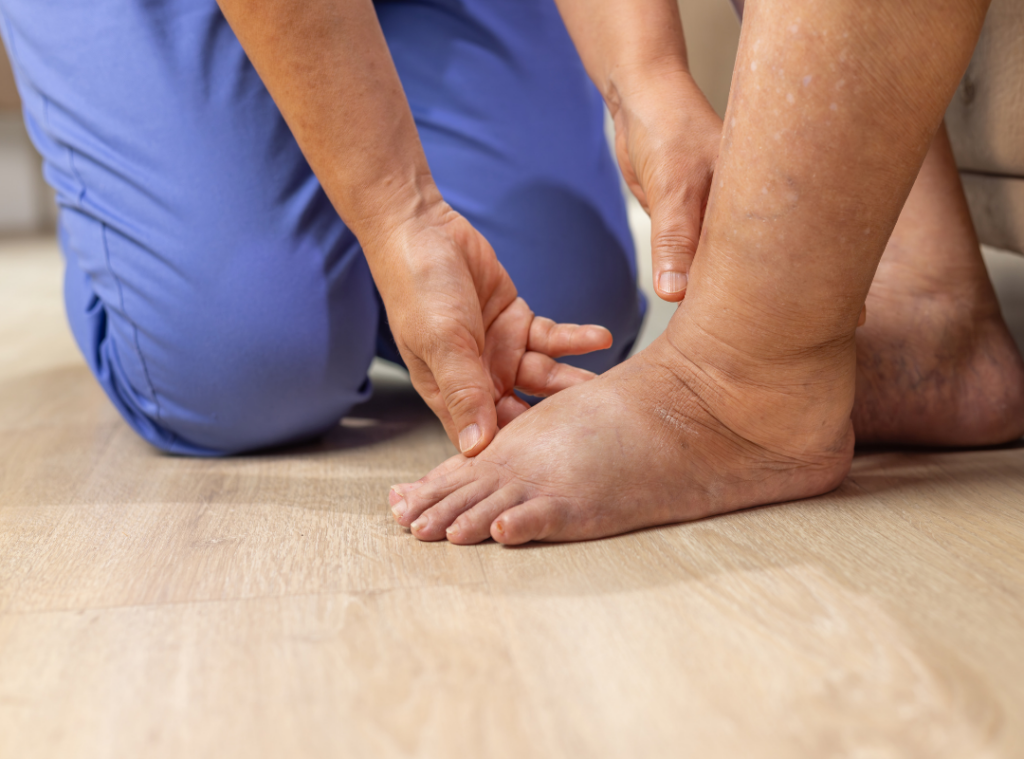
Foot care for elderly adults includes keeping the feet clean, dry, protected, and regularly checked for changes. Proper footwear, help with daily care, and podiatry visits can support comfort, movement, and overall wellness. New pain, swelling, color changes, numbness, or slow-healing wounds should be discussed with a qualified healthcare professional.
Foot care can become harder when you cannot easily bend, reach your feet, see small changes, or manage your shoes and nails. Understanding what to watch for can help you or your family respond before a concern begins affecting daily routines. At Serenity Pointe in Zephyrhills, regular podiatry visits are part of the community’s approach to resident wellness.
What Does Foot Care for Elderly Adults Include?
Foot care for elderly adults is the regular process of keeping the feet clean, dry, protected, observed, and professionally evaluated when needed. It may include daily checks, gentle hygiene, properly fitting footwear, appropriate nail care, help with personal routines, and visits with a podiatrist.
This combination matters because no single task covers every part of senior foot health. Daily care helps you notice changes. Support from family members or caregivers can make routines more manageable. Podiatry for seniors provides clinical evaluation and treatment when a foot or ankle concern needs specialized attention.
This type of routine becomes especially useful when reaching the feet, noticing small changes, or managing footwear has become difficult.

Why Foot Health Can Influence a Senior’s Everyday Routine
Foot health can affect how comfortably and confidently you complete everyday activities. Pain, pressure from shoes, nail concerns, or changes in sensation may make walking, standing, dressing, or bathing feel more difficult. You may also begin avoiding activities because you are unsure what is causing the discomfort.
Foot pain and poor footwear are among the factors associated with falls in older adults. The Centers for Disease Control and Prevention reports that more than one in four adults age 65 and older falls each year. That does not mean every foot problem will cause a fall, but it shows why changes in comfort, balance, walking, and footwear deserve attention.
Foot Care and Personal Independence
The right support can help you remain involved in your own routine. Assistance may include making supplies easier to reach, helping with shoes and socks, or arranging professional care for tasks that are difficult or unsafe to manage alone.
Why Families May Notice Changes First
A family member may notice that an older adult walks differently, stops wearing favorite shoes, avoids standing, or needs more time with personal care. These observations do not reveal the cause, but they can begin a useful conversation about comfort and whether an examination is needed.
Common Foot Problems in Elderly Adults and What Families May Notice
Foot problems in elderly adults may affect the skin, nails, toes, footwear fit, sensation, or walking. Bunions and ingrown toenails are two examples of foot problems that may affect older adults, although many other concerns are possible. A podiatrist can examine the feet, identify the cause of a change, and recommend appropriate care.
The table below can help you organize what you notice without trying to diagnose the problem yourself.
| Type of concern | What you or your family may notice | A sensible next step |
| Skin-related concern | Redness, cracking, irritation, a sore, or any other visible change | Keep the area clean and ask a healthcare professional for guidance |
| Nail-related concern | Thickened, discolored, painful, or difficult-to-manage nails | Ask whether professional nail or foot care is appropriate |
| Footwear-related concern | Rubbing, pressure marks, poor fit, or reluctance to wear certain shoes | Review the fit and discuss ongoing discomfort with a professional |
| Structural or movement concern | A bunion, a toe-position change, balance difficulty, or a different walking pattern | Arrange an examination with an appropriate healthcare professional |
| Circulation-related concern | Unusual temperature or color differences, numbness, or a slow-healing wound | Seek timely medical attention |
A family member may be most helpful by recording when the change began and how it affects the person’s routine. This gives the podiatrist or healthcare provider clearer information and helps avoid guesswork.
A Practical Routine for Supporting Senior Foot Health
A simple routine can make senior foot health easier to manage. The goal is not to inspect every detail with worry. It is to create a familiar process that helps you notice meaningful changes and know when to ask for help.
Use the Look, Clean, Protect, and Report framework:
- Look: Check the tops, soles, heels, toes, and spaces between the toes for changes.
- Clean: Wash gently and dry the feet carefully, including between the toes.
- Protect: Wear clean socks and properly fitted shoes that feel secure and comfortable.
- Report: Tell a healthcare provider about persistent pain, swelling, sores, numbness, or other concerning changes.
The CDC’s feet and footwear guidance for older adults recommends properly fitted shoes with features such as laces or straps, a textured sole, a firm heel area, and appropriate arch and heel support. A healthcare provider or podiatrist can also check for foot and footwear concerns connected with fall risk.
When an Older Adult Cannot Manage Foot Care Alone
Reaching the feet, seeing small changes, trimming nails, or fastening shoes can become difficult. Personalized help may be appropriate when these tasks cause strain, are frequently missed, or no longer feel safe. The Lifestyle Assessment can help families reflect on changes in daily routines and the type of support that may be useful.

What Does a Podiatrist Do for Seniors?
A podiatrist is a healthcare professional who specializes in the feet, ankles, and related areas of the lower legs. Podiatrists evaluate symptoms, diagnose foot and ankle conditions, recommend treatment, and help patients manage concerns that affect movement or daily activities.
According to the Cleveland Clinic’s explanation of podiatric care, a podiatrist may examine how you stand and walk, ask about your shoes and symptoms, and provide treatment based on the condition identified. Professional podiatry differs from routine personal care because it involves clinical examination and diagnosis.
Why Regular Visits Can Be More Useful Than Waiting for a Problem
Regular visits give you an established place to discuss changes in comfort, skin, nails, walking, or footwear. A podiatrist can also explain what you or your family should watch between appointments. The right visit schedule will depend on your needs, health history, current concerns, and the podiatrist’s recommendations.
Questions to Bring to a Podiatry Appointment
A few notes can make the appointment more useful:
- When did the change or discomfort begin?
- Does it affect walking, standing, footwear, or daily activities?
- Are there tasks that have become difficult to manage at home?
- What should you monitor between visits?
- Which parts of foot care are safe to handle personally?
Clear questions help you understand the next step and reduce the chance of taking care that may not suit the actual problem.
Which Foot Changes Should Prompt Professional Attention?
New, persistent, or worsening changes in the feet should be brought to a podiatrist’s or healthcare provider’s attention. Signs that may need care include pain, redness, swelling, warmth, numbness, sores, changes in skin or nail color, and difficulty walking or wearing shoes.
A visible change does not always reveal what is causing it. Avoid cutting or treating an unfamiliar sore, nail problem, or skin change without guidance, especially if you have reduced sensation, circulation concerns, or specific instructions from your healthcare provider.
Visible Changes
Watch for new redness, swelling, discoloration, cracks, wounds, nail changes, or changes in the shape of the foot or toes. Note whether the area is growing, painful, warm, draining, or affecting footwear.
Changes in Sensation or Comfort
Pain, burning, tingling, numbness, or unusual sensitivity may interfere with walking and daily care. Contact your healthcare provider if the change persists, worsens, or affects your usual activities.
Changes in Walking or Daily Function
A senior may begin taking shorter steps, avoiding stairs, holding onto furniture, or refusing certain shoes. These changes can have several causes, so an examination is more useful than assuming they are simply part of aging.
Possible Signs of Poor Circulation in the Feet
Possible circulation-related signs may include one foot feeling colder than the other, pale or bluish skin, leg or foot discomfort during activity, numbness, or sores that heal slowly. The National Heart, Lung, and Blood Institute explains that these changes can occur with peripheral artery disease, but symptoms vary, and some people have no clear symptoms. Ask a healthcare provider to evaluate concerning changes instead of trying to diagnose poor circulation by appearance alone.
How Families Can Make Foot Care Easier and More Respectful
Family support works best when it protects the older adult’s privacy, preferences, and sense of control. Begin by asking whether help would be welcome. You might offer to arrange an appointment, place supplies within easier reach, or help check whether shoes still fit comfortably.
Keep the conversation focused on practical observations. Saying, “I noticed those shoes seem uncomfortable,” will usually feel more respectful than making a frightening prediction about what the change might mean. Write down what you observe so the senior can share accurate details at the next appointment.
A Simple Family Check-In
You can begin with three gentle questions: “Are your shoes still feeling comfortable?” “Has anything changed when you walk or stand?” and “Would you like help arranging a foot-care visit?” These questions give the older adult room to explain what they are experiencing and choose what kind of assistance feels appropriate.
How Foot Care Connects With a Broader Senior Wellness Plan
Foot health is connected with personal care, movement, nutrition, vision, medical follow-up, and the ability to complete daily routines. A senior who has trouble reaching their feet may also find dressing or bathing more difficult. A person who cannot see foot changes clearly may benefit from regular observation and eye care. Pain or poor shoe fit may affect willingness to move around.
A useful wellness plan follows three steps: notice, coordinate, and support. You notice changes in comfort or routine, coordinate concerns with family members and appropriate professionals, and adjust daily support to reflect the senior’s needs. This creates a clearer connection between personal assistance and clinical care without confusing the roles of each.
Families exploring a broader level of support can find additional information on the Serenity Pointe blog. You can also review Serenity Pointe’s assisted living services to understand how personalized care plans, daily assistance, and wellness-related visits fit within community life.
Regular Podiatry Visits at Serenity Pointe in Zephyrhills
Foot care is most effective when daily observation and professional guidance work together. Serenity Pointe offers assisted living at 38906 North Ave in Zephyrhills, Florida, with regular podiatry visits, monthly doctor checkups, personalized care plans, and assistance with daily activities. Personalized daily routines and 24/7 staff support can also help residents receive consistent assistance while remaining involved in their own care.
If changes in personal care or mobility are leading your family to consider additional support, you can complete the Care Assessment or schedule a personal visit to see how daily wellness is supported at Serenity Pointe. For questions about podiatry visits or assisted living, contact the community.
Frequently Asked Questions
How do you take care of elderly feet?
Care for elderly feet by checking them regularly, washing them gently, drying them well, and using properly fitted shoes and clean socks. Pay attention to pain, swelling, redness, numbness, wounds, or changes in walking. Ask for assistance if reaching, seeing, or safely caring for the feet has become difficult. Persistent or concerning changes should be evaluated by a healthcare provider.
What are two common foot problems of the elderly?
Bunions and ingrown toenails are two examples of foot problems that may affect older adults. Bunions may change the shape of the foot and make shoes uncomfortable, while ingrown toenails may cause pain and irritation around the nail. Many other skin, nail, nerve, and structural concerns are also possible. A podiatrist can identify the cause and recommend appropriate care.
What is geriatric foot care?
Geriatric foot care is foot care tailored to the needs and challenges that may come with aging. It combines regular observation, hygiene, properly fitting footwear, appropriate help with personal care, and clinical evaluation when needed. It also considers how foot changes may affect walking and daily routines. The type and frequency of care should reflect the individual’s needs.
What are the signs of poor circulation in the feet?
Possible signs of poor circulation include one foot feeling colder than the other, pale or bluish skin, numbness, pain during activity, and sores that heal slowly. These signs can have different causes and cannot confirm a circulation problem on their own. Some circulation conditions may also have few or no obvious symptoms. A healthcare provider should evaluate new or concerning changes.
Can assisted living help with senior foot-care routines?
Assisted living may help when a senior needs more consistent support with daily activities and personal routines. At Serenity Pointe, relevant services include personalized daily assistance, personalized care plans, regular podiatry visits, and monthly doctor checkups. The appropriate level of assistance depends on each resident’s needs. Families can ask how these services fit into a personalized care plan.